Overview
TimePay is the behavior engine that makes priced content adoptable — not just theoretically correct. It existed as a concept when I joined. I turned it into a complete access system with three payment paths and behavior-design logic.
My contribution: Rethink & redesign — I transformed a loose concept into the linchpin of the entire ecosystem.
The Problem TimePay Solves
The research was clear: users don’t resist paying — they resist committing to an uncertain outcome.
Price works as a quality signal when it’s informational. Users see a higher-priced article and treat the price as a trust indicator. But the moment payment enters, the same price becomes fear and friction. “Buy content” is the wrong language — users don’t feel they own the content after paying for access.
The question wasn’t “how do we lower prices?” It was “how do we design an access system that matches how people actually decide to spend?”
Three Access Paths
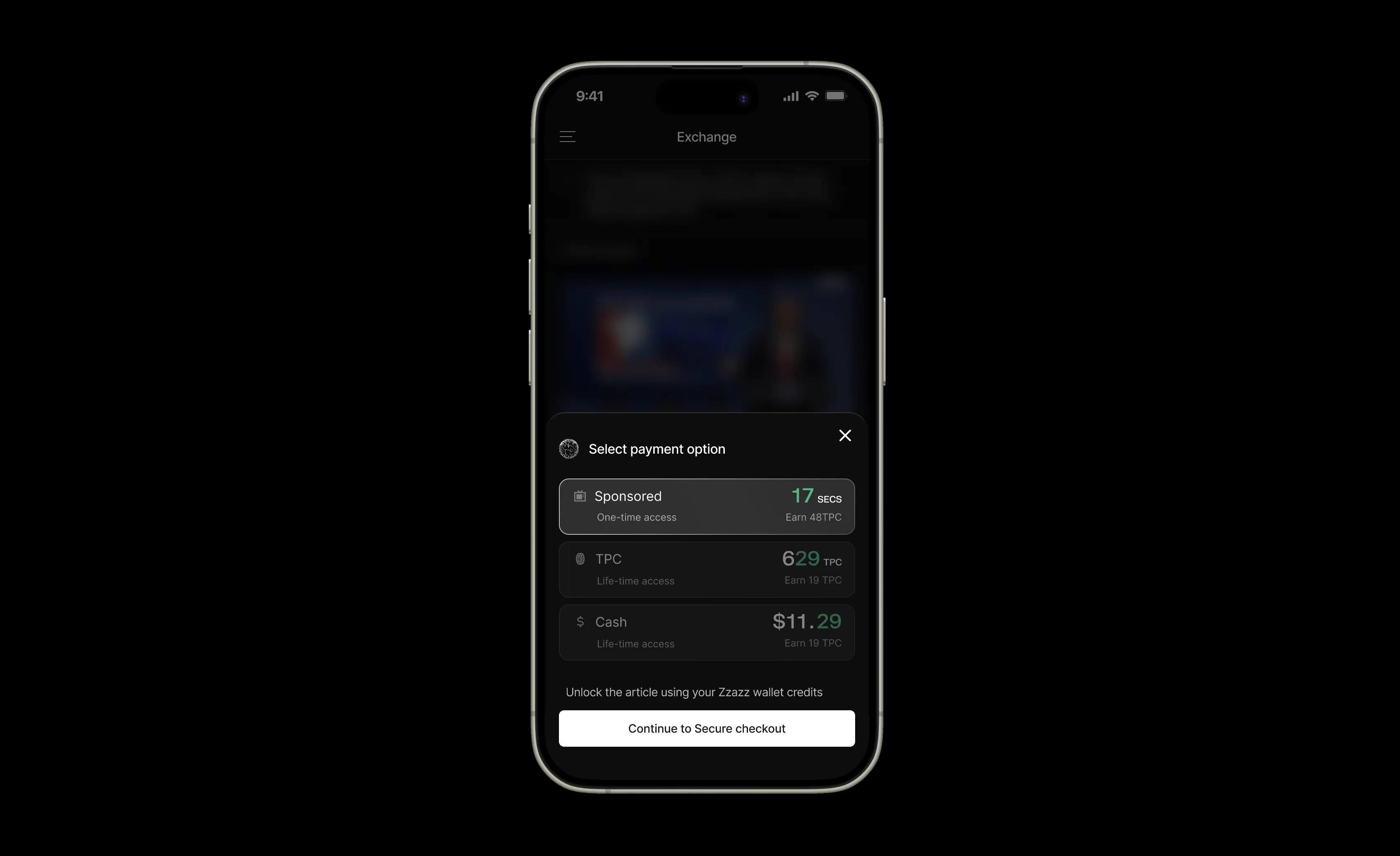
Cash Payment
Direct purchase at the content’s market price. For users who know what they want and trust the creator. Highest margin, lowest volume. Works best for high-value, time-sensitive content where the user has clear intent.
TPC Credits
Users earn credits through engagement, sharing, and contributing to the ecosystem — then spend credits on content. Creates a circular economy where participation generates purchasing power. Lowest friction for active users.
Sponsored Access
Brands pay for the user’s access in exchange for attention. Cricket content shows a cricket equipment brand. The user reads for free. The creator earns. The brand reaches a high-intent audience. Powered by Ad Exchange’s content-intent matching.
The Psychology Behind Three Paths
The three-path model isn’t just about offering choice. It’s about matching access methods to behavioral states:
- “I know I want this” → Cash payment (decisive users with clear intent)
- “I’ve been active, I’ve earned this” → TPC credits (engaged users who feel ownership over earned value)
- “I’ll trade attention for access” → Sponsored access (cost-sensitive users willing to engage with relevant brands)
Every user finds a path that matches their current mindset. The system never forces a single behavior. Choice architecture, not lower prices, drives adoption.
Why Mobile-First
I prioritized mobile because TimePay lives at the point of impulse. Users discover content on their phones through Widget or Plugin — both primarily mobile contexts. Micropayment decisions are impulse-driven — no one switches devices to pay ₹10 for an article. If the mobile experience has friction, the transaction dies.
The payment layer itself is natively mobile — Apple Pay, Google Pay, tap-to-pay. Designing for desktop first would mean designing around the weaker payment UX. And TimePay’s “attention as currency” model (sponsored access) is a mobile behavior pattern borrowed from mobile gaming and social media. Desktop flows were planned as responsive scale-ups, not the other way around.
The TPC Credit Loop
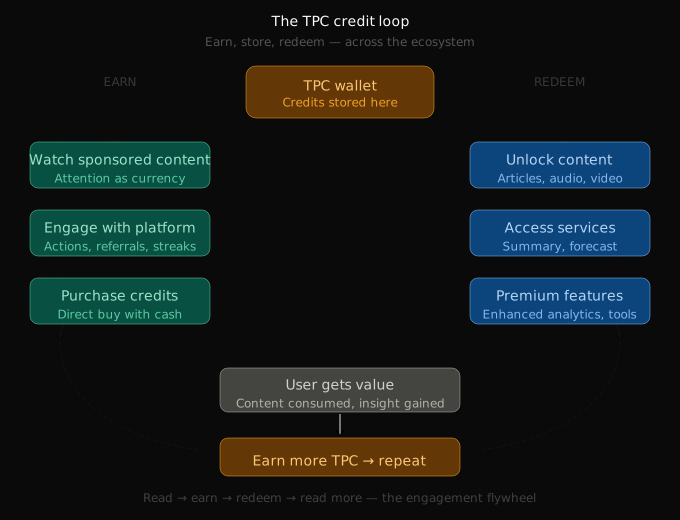
Credits create a self-reinforcing cycle within the ecosystem:
Earn — Users accumulate TPC through engagement: reading content, sharing, contributing, completing actions. The more they participate, the more purchasing power they generate.
Store — Credits persist across sessions. Users build a balance that represents their investment in the ecosystem.
Redeem — Credits unlock content across Exchange. The redemption moment feels like spending something you earned — fundamentally different from spending money.
Earn Again — The content consumed generates new engagement signals, which feed back into more credit opportunities.
The Access Experience
When a user encounters priced content on mobile, the access layer appears as a native bottom sheet — minimal, decisive, zero navigation:
- Content is priced — the LPM price is visible as a quality signal
- Three options displayed — cash, credits, and sponsored access with clear value propositions
- Sponsored access highlights the brand — “Get sponsored by [Brand]” makes the trade explicit and transparent
- Access unlocked — content opens seamlessly. No redirect, no new page, no friction.
Why TimePay Is the Linchpin
Without TimePay, ZZAZZ’s pricing thesis breaks. Showing prices without a behavior-appropriate way to pay creates frustration, not trust. TimePay bridges the gap between “this content has a price” and “I’m willing to access it.”
The data validated this: 80–98% of users engaged with at least one access path when given the three-path model. Compare that to 1.9% subscription penetration and 57% paywall abandonment in the traditional model.