Overview
Ad Exchange is the advertising layer of ZZAZZ — connecting brands with priced content environments. It didn’t exist when I joined. I identified the gap in the ecosystem, researched the ad landscape, and defined the complete product strategy.
My contribution: Gap identification + landscape research + product architecture + future scoping. This was a strategy-first vertical — the value was in defining what to build and why before any screens were designed.
The Gap I Identified
While designing TimePay’s three access paths (cash, credits, sponsored), I realized the “sponsored” path had no engine behind it. Without an ad system, TimePay only serves users willing to pay or earn credits — cutting off a massive segment.
At the same time, cookie-based ad targeting is dying. Post-AI, the logic for mapping ads through cookies continues to weaken. But ZZAZZ has something traditional ad platforms don’t: content understanding at the pricing level.
If the LPM knows what a piece of content is about deeply enough to price it, it knows enough to match it with the right brand — without ever tracking the user.
The Content-Intent Model
I defined a fundamentally different advertising model:
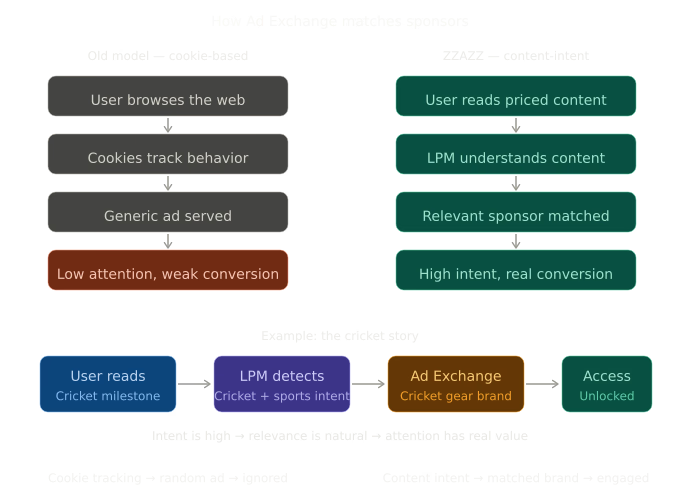
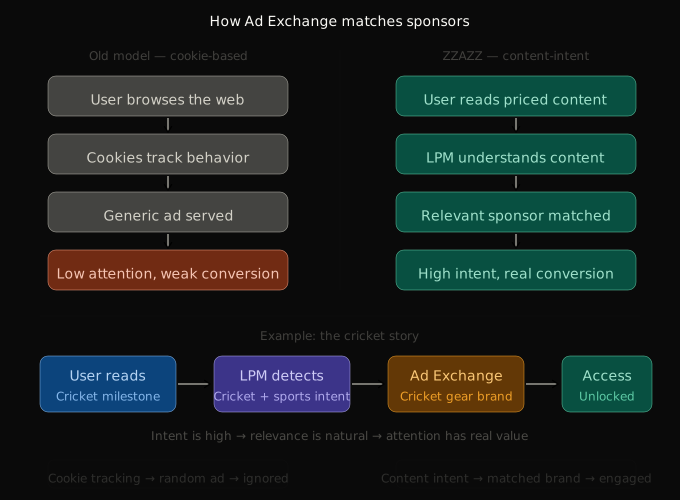
Traditional advertising: track the user → build a profile → show ads based on browsing history.
ZZAZZ Ad Exchange: understand the content → match brand to content intent → show ads based on what the user is actively consuming.
Content Understanding
The LPM already evaluates content deeply. A cricket article about Kohli’s century isn’t just “sports” — it’s cricket, performance, achievement, competition.
User Intent
A user reading that article has cricket intent right now. Not because of cookies — because of what they chose to read.
Brand Match
Cricket equipment brands, sports streaming services, athletic wear — brands whose products align with the content’s topic and the user’s current mindset.
Sponsored Access
The brand pays for the user’s content access. The user reads for free. The creator earns. The brand reaches a high-intent, contextually relevant audience.
Why This Is Better Than Cookies
- Privacy-native — no user tracking, no third-party cookies, no consent fatigue
- Higher intent — the user is actively consuming relevant content, not passively scrolling
- Premium pricing — priced content signals engaged audiences, so brands pay more
- Three-way value — user gets free access, creator earns, brand reaches the right audience
What This Unlocks for the Ecosystem
Ad Exchange powers the “sponsored access” path in TimePay. Without it, TimePay only has two paths. With it, users who won’t pay cash and haven’t earned credits can still access content — dramatically expanding the addressable audience.
The economics work because the content itself is the targeting signal. No profiles to build, no data to collect, no regulations to navigate.
My Deliverables
- Gap analysis — Identified that the sponsored access path in TimePay had no backend engine and would be the ecosystem’s growth bottleneck
- Landscape research — Analyzed cookie-decline impact, content-intent advertising models, and contextual ad economics across 12+ platforms
- Product architecture — Defined the matching logic, brand-facing workflows, campaign structures, and integration points with LPM and TimePay
- Future scoping — Complete vision document for how Ad Exchange scales as content volume grows — from MVP matching to automated brand-content intelligence
This vertical demonstrates that product design isn’t always about screens. Sometimes the highest-leverage contribution is defining what needs to exist and why — before a single pixel is placed.